Category: Uncategorized

  • mountain stars

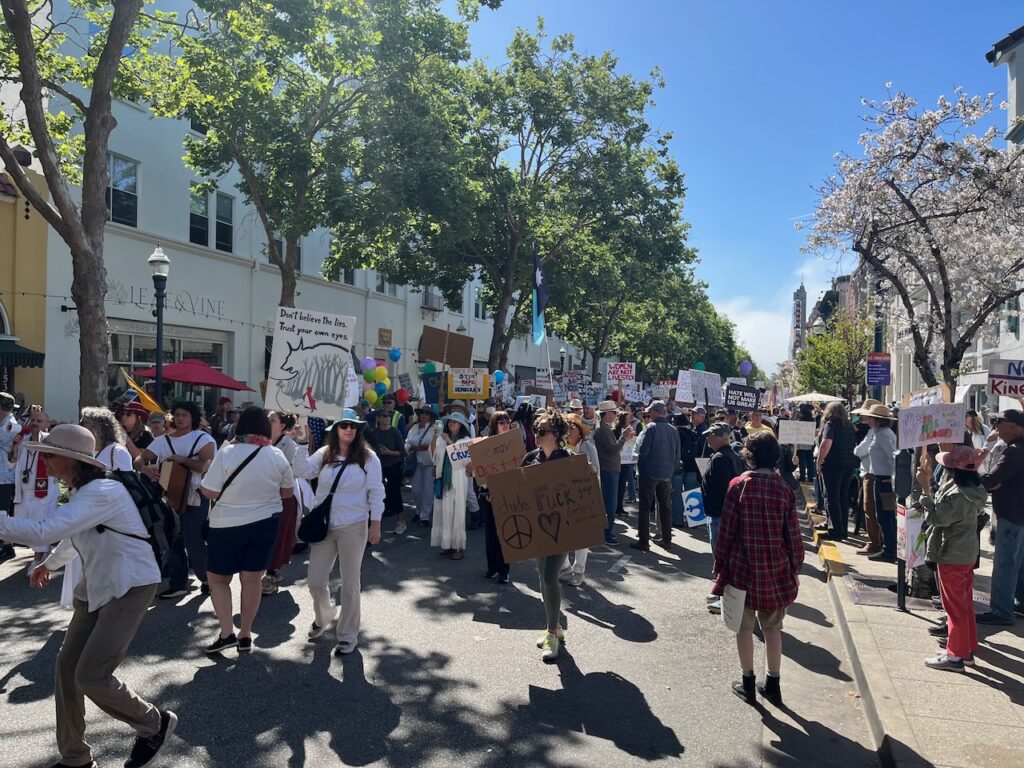
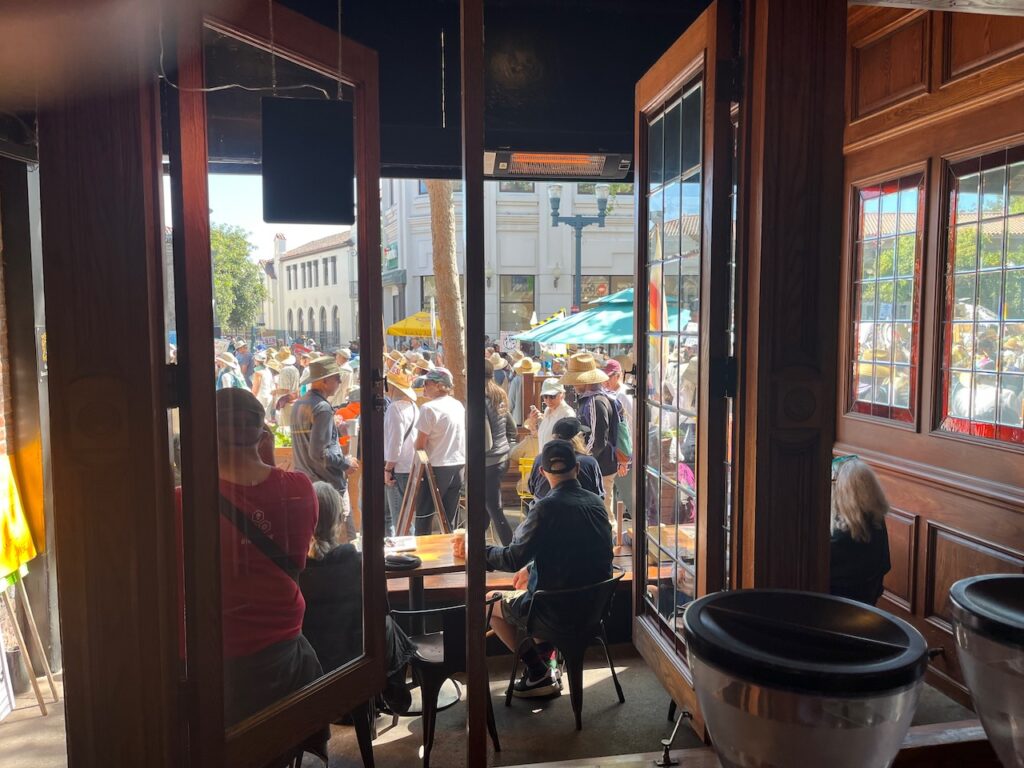
    I’m in California right now, but I thought I’d check in. I was up in the mountains skiing for a little while, which was weird, because the highs were in the low seventies, so it was like skiing on Slurpees for most of the time. But even so, I had fun. It was typical spring skiing: guys in shorts, girls in bikinis, guys in Spider-Man costumes… the usual shenanigans. The only problem was that the weather was like what it is at the end of April, not the middle of March. So it goes!

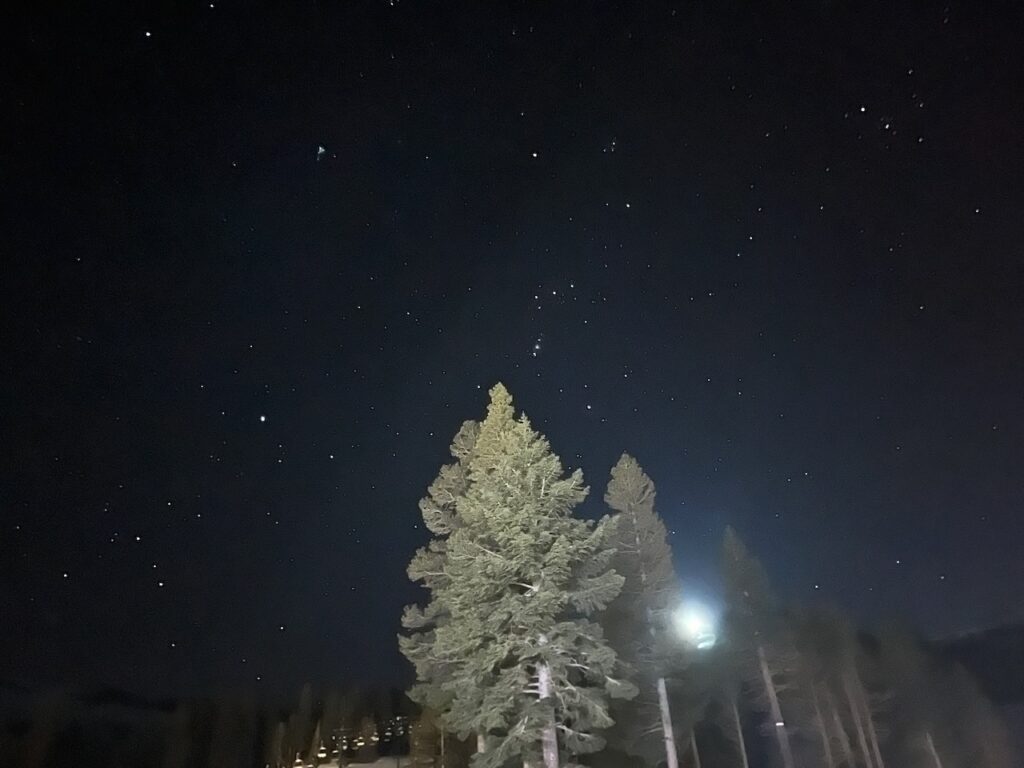
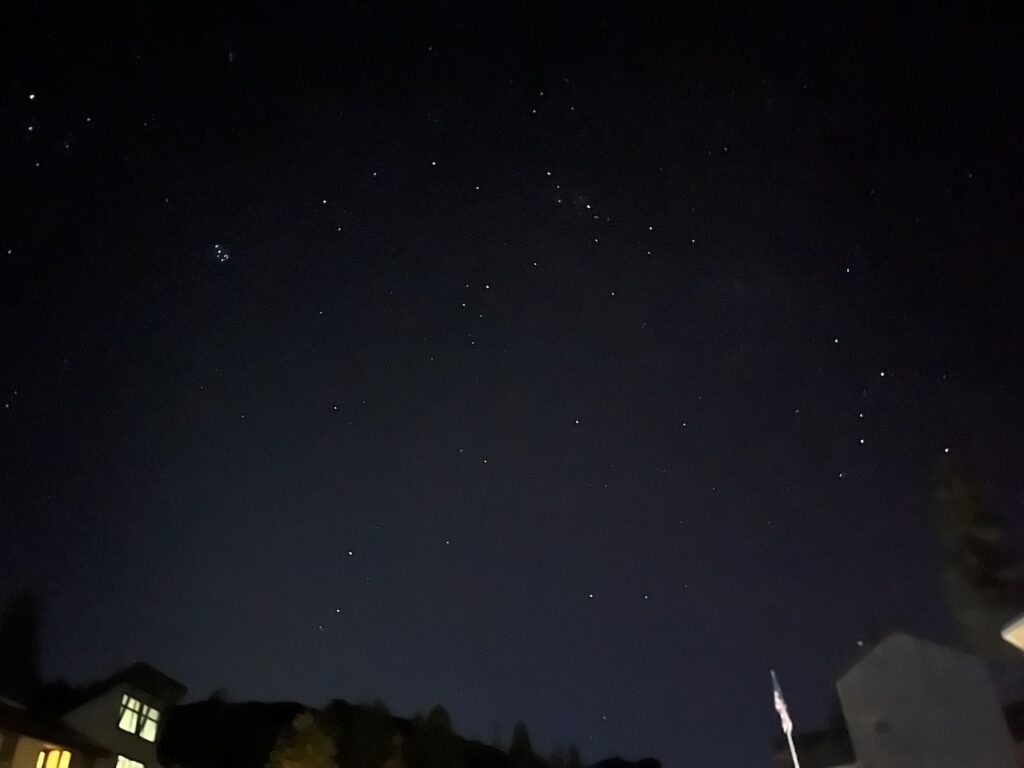
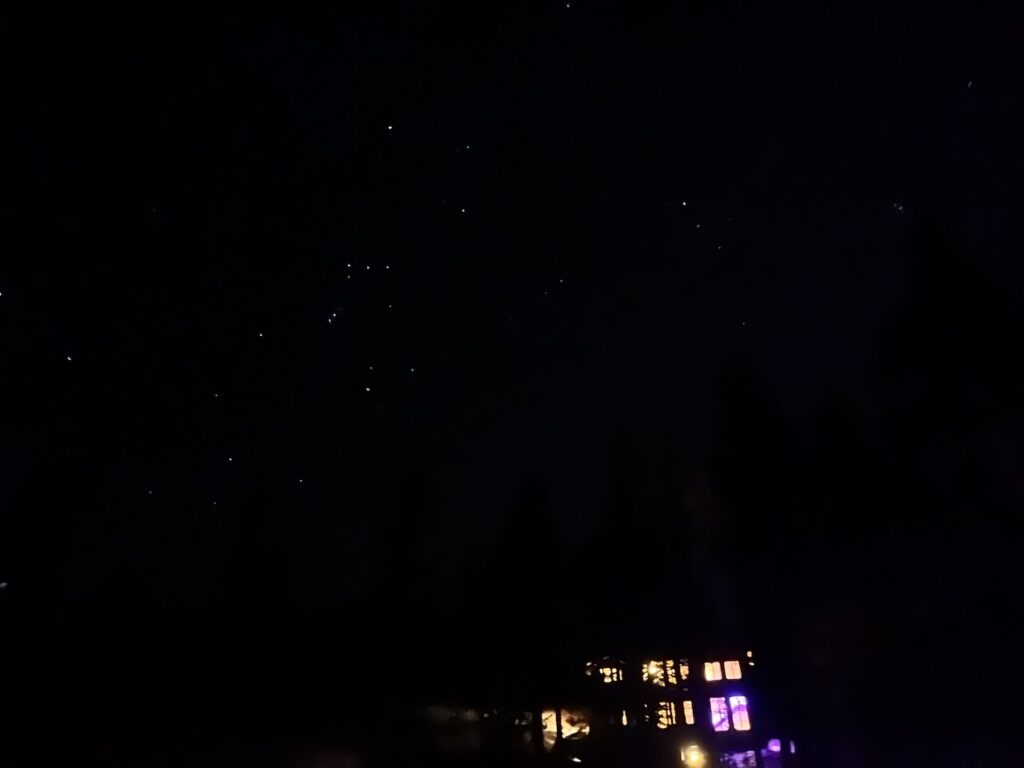
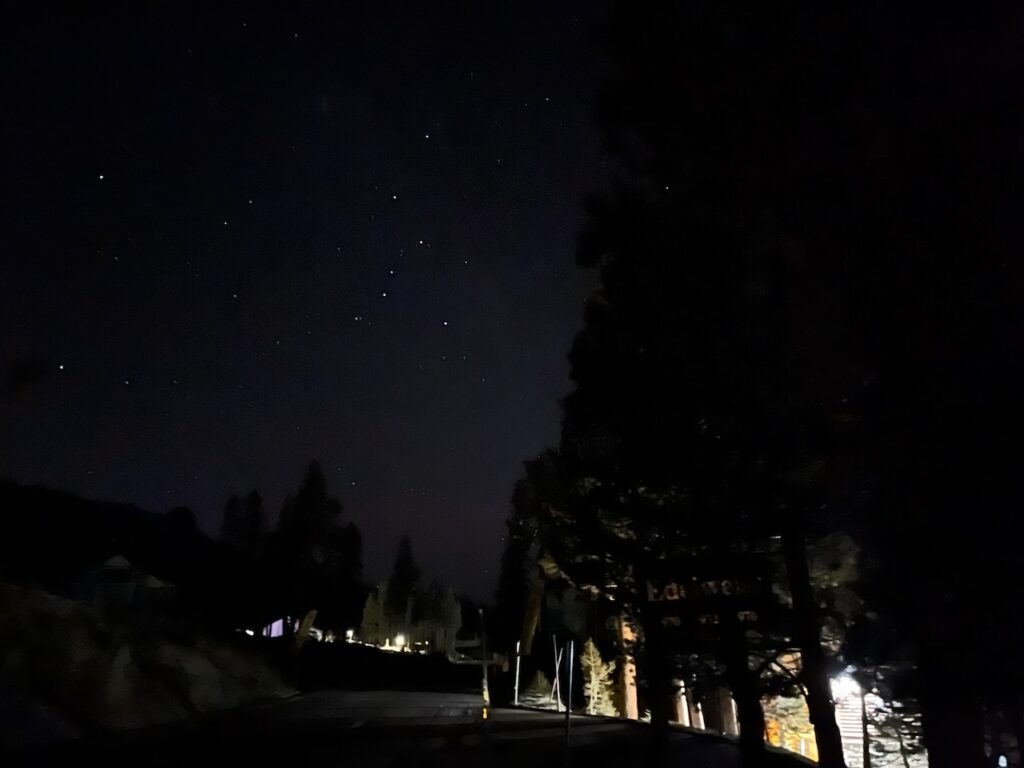
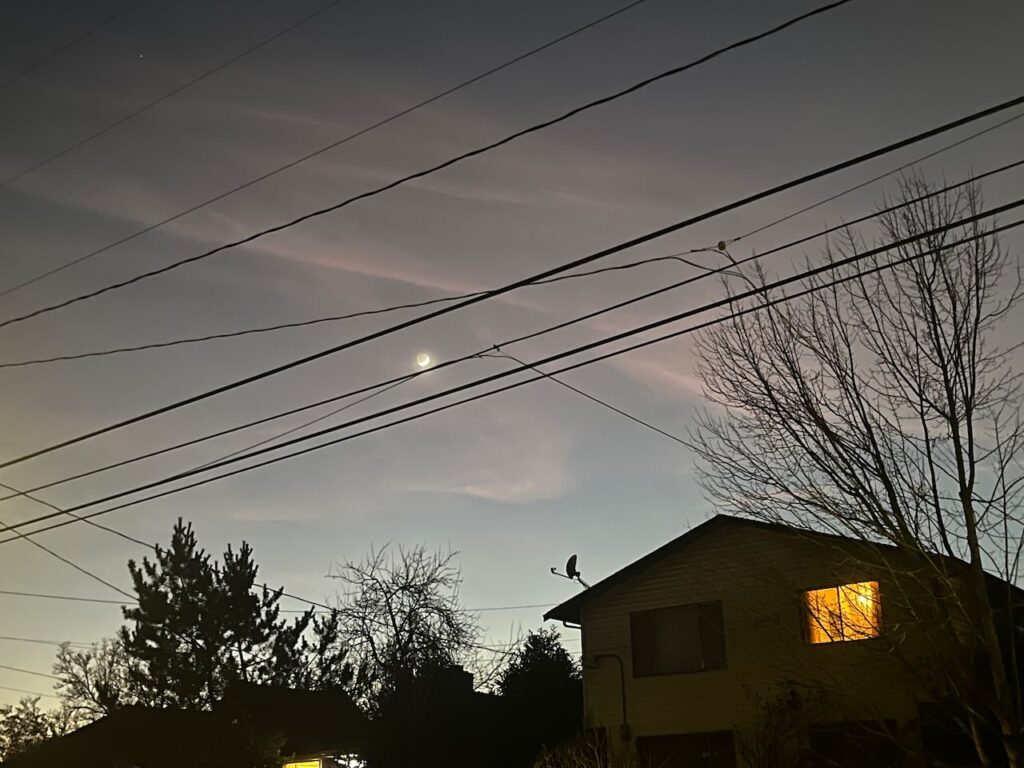
    I tried to take some pictures of the stars while I was up there. I think they turned out pretty good! At least, they were pretty good for a basic iPhone camera.

    It’s nice to be able to see stars. Back home, the night sky is shrouded in clouds most nights and light pollution the rest of the time, so seeing some actual spacelights is a welcome treat

    Writing continues apace. I’m almost done with a draft of a novel. Gonna ship that out to beta readers soon and start querying it by this summer. I’ve also written a few short stories that I’m going to submit after revisions. My hope is that 2026 will be the Year When It Finally Happens™. Unfortunately, I wanted that about 2025, and while the Resnick award was cool, I’m still not a Publicated Authorist, as I call it. My fear is that I’m going to think that this year will be the Year When It Finally Happens™ until there are no years left. I don’t think that’s a writer thing, though. It’s a human thing.

  • thoughts on being average

    Thought the First

    If we trace the Semitic languages as far back as we can, we can find out that the Proto-Semitic word for blindness was something like *ʕwr. This eventually got extended to mean “damage someone’s eye to make them blind”, and eventually, when it arrived in Arabic as ‘awār, meaning “damage” more generally.

    By the time *ʕwr became ‘awār, the Arabs were no longer desert nomads. This was the Islamic golden age, and ships of Arab sailors plowed the Mediterranean, trading with nations across Africa, Asia, and Europe. The Venetians and Genoese were especially close trading partners with the Arabs. They borrowed the word ‘awār as avaria, which, due to the maritime links with the Arabs, meant “damage to a ship’s cargo”.

    The word got borrowed into many different European languages, usually meaning something like “damage”. The word averría in Spanish, for example, means a mechanical failure in a car. But in English, after a detour through French as the word avarie and the addition of the suffix -age to bring it in line with words like damage, this word passed into maritime law as a method of determining the shared liability of cargo damaged or lost at sea. This financial liability would be apportioned by adding up the value of all damaged goods and dividing by the number of interested parties.

    By the 1600s, that word got used to refer more generally to taking the arithmetic mean in general, then, in the 1800s, to mean “typical” or “ordinary”, then, finally, to mean “unexceptional” or “middling in quality”. And that’s how we get the word average.

    From blindness to boring in five thousand years.

    Thought the Second

    Half of all people have two testicles. Half of all people have none.

    Half of all people have two ovaries. Half of all people have none.

    This means, mathematically speaking, the average person has one testicle and one ovary.

    Thought the Third

    Some people lose fingers or toes. Some people have their ears cut off. Some people have one or both eyes put out. Some people have their arms torn off or their limbs amputated.

    I have ten fingers, ten toes, two ears, two eyes, two arms, and two legs.

    I think, technically, that makes me above average.

  • they promise education but really they give you tests and scores

    This last few days has, unfortunately, been the cat vomit frosting upon the giant shit cake that 2026 has been so far. There has been a bit of turmoil in my personal life. Unfortunately, I got fired.

    I won’t go too far into the details, but the tl;dr is that there was a girl who was being a consistent bully. Every single day, she was consistently, deliberately cruel to other students, mainly a group of other girls, and – worse than that – an autistic first grader who had to be moved into another group because of her actions. The bullying took the form of insults, mockery, physical harassment, and, on two separate occasions, spitting on other students. Last week, I finally lost my temper at her and said some things that, perhaps, I shouldn’t have said. She told her mother, who is a teacher at the school where I worked. And because of that, I got let go.

    I accept full culpability on my part. I said things that were wrong, and I acknowledge it. But I cannot stand bullies, and especially those who enable them: which, I realize now, my after-school program was doing. Furthermore, they provided me with inadequate support to deal with the situation from either a disciplinary or emotional perspective, and then punished me for their lack of competency. I generally give people the benefit of the doubt. But by condoning this child’s harmful, antisocial behavior, I realize now that this job wasn’t worth my time.

    When I was growing up, I was conditioned by teachers and, especially, my in-classroom aide of ten years to expect bullying as my birthright. If I fought back, I was punished for acting out. If I reported other kids’ behavior, I was told off for tattling. The other kids, seeing that I was being punished for their actions, were emboldened. Eventually I bore it in silence, keeping my anger simmering on the inside like a pressure cooker with a faulty release valve, until it exploded outward.

    I don’t blame the other kids for their actions. Kids don’t have fully developed empathy, and honestly, they don’t entirely finish growing that part of their psyches until they’re in their early twenties. But I blame the authority figures around me, who should have seen that I was vulnerable, and instead of protecting me, just made me a target. Furthermore, whenever another student was nice or kind to me in any way, I was expected to treat it as an act of generosity on par with Mother Teresa. For my teachers and aide, bullying and cruelty were the default state of affairs, and even being deliberately ignored was considered a kindness.

    Ever since I left high school, I’ve arranged my life so as to avoid bullies. Now that I finally have a choice as to who I spend time with, I’ve cut off contact with any of the teachers who enabled my bullies, as well as other toxic influences in my life – arrogant bosses, narcissistic roommates, manipulative and judgmental former friends. I survived school. I’m done with it.

    I believe I’m done working in education for a while. I don’t want to be a part of a system that punishes those who stand up to bullies while, at the same time, rewarding the arrogance and cruelty of those same bullies. As the death stick merchant in Attack of the Clones said, I need to go home and rethink my life. As that nice Mr. Vonnegut said, so it goes.

    ~ Ian (currently listening to The Silver Cord by King Gizzard and the Lizard Wizard)

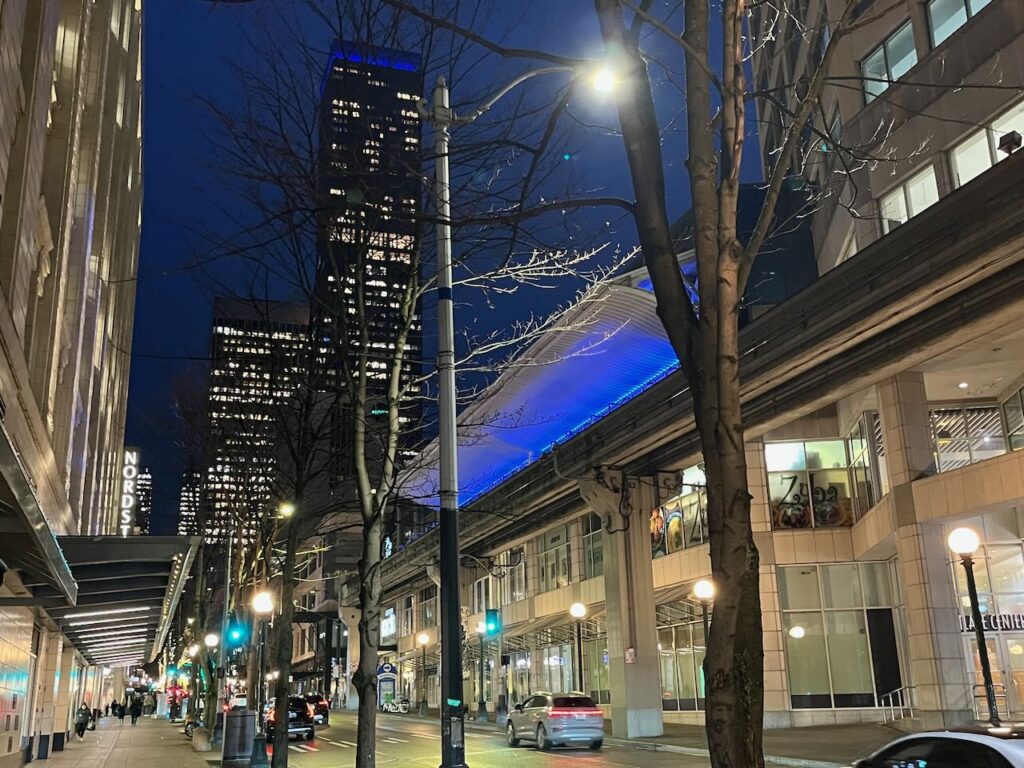
  • lights in the winter darkness

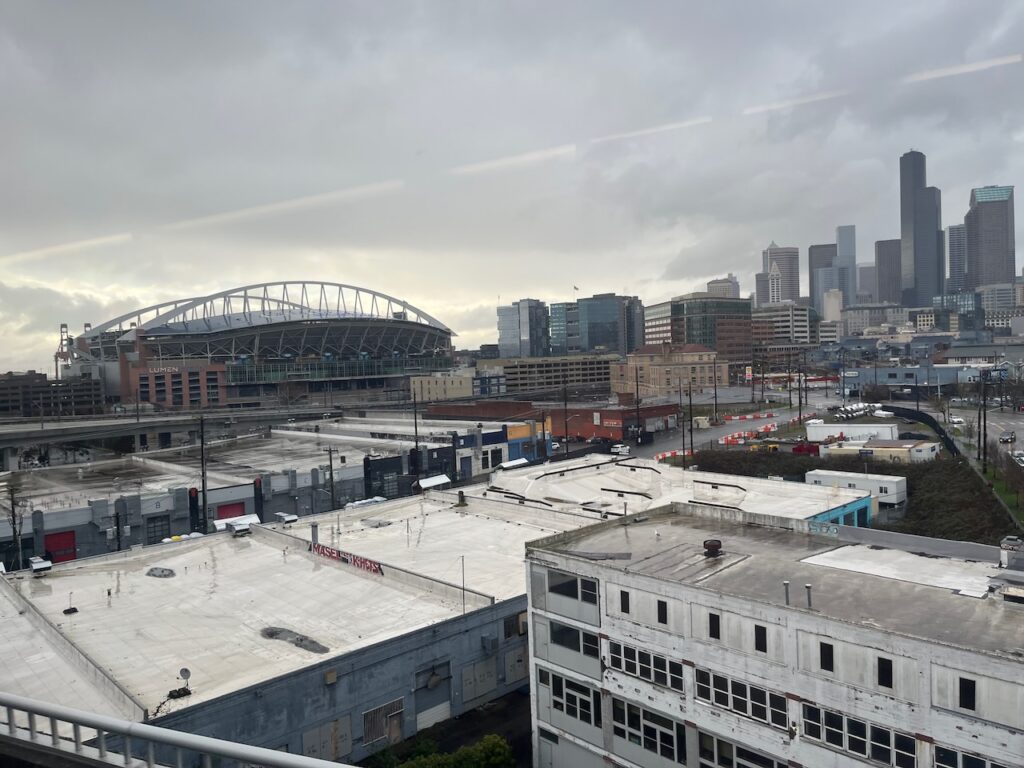
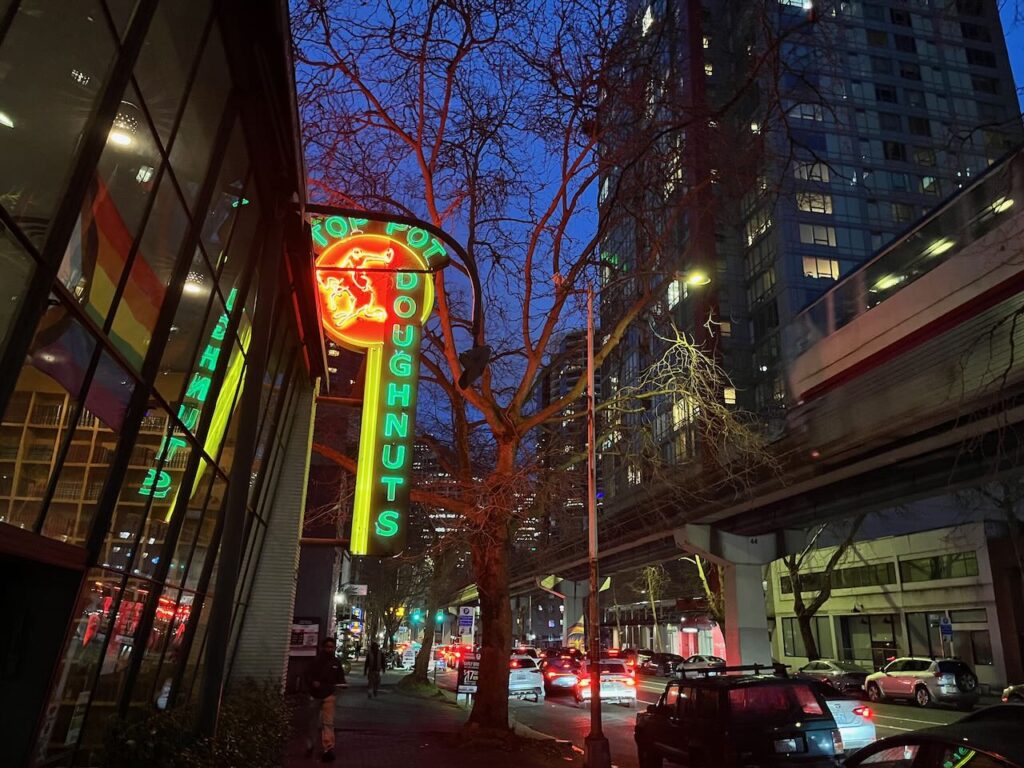
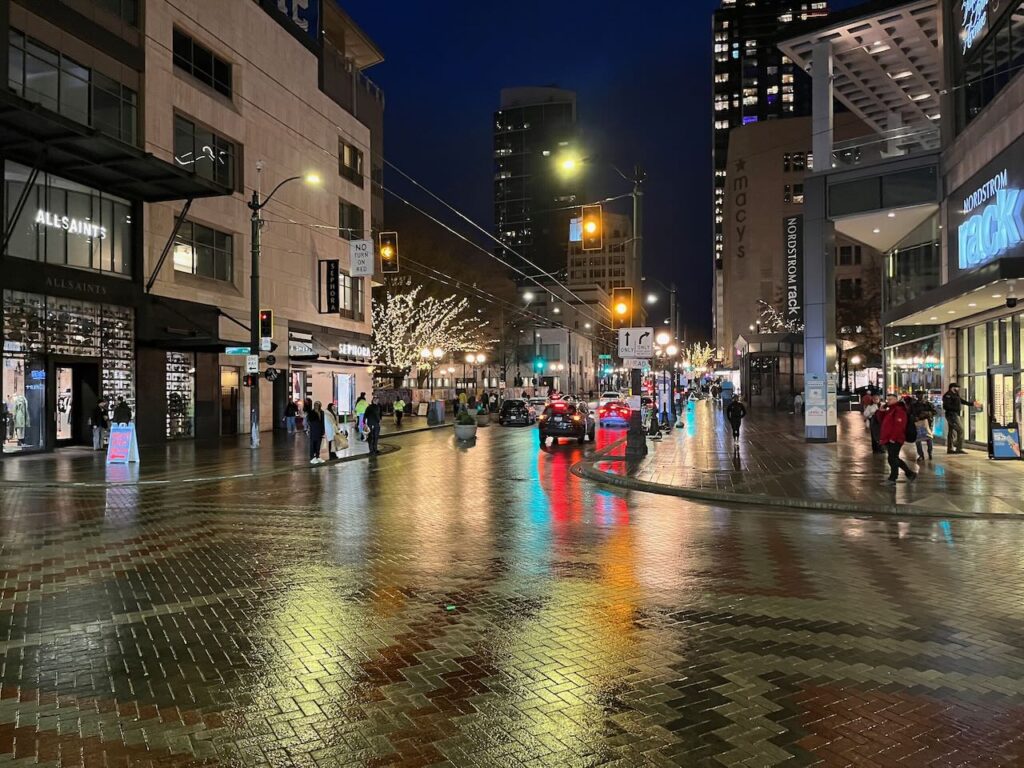
    When I first moved to Seattle, it snowed a few days every winter. Not a lot, only a few inches, but the city shut down because of it. For some reason, Seattleites are unable to handle the smallest number of flakes, and grocery stores would be stripped bare, as if an apocalypse was at hand.

    It hasn’t snowed this winter.

    I don’t know if that’s just an anomaly or if that’s going to be the pattern going forward. The climate is fucked. I don’t know if it’s irrevocably fucked, but the people in power show no interest in un-fucking it. Maybe within my lifetime, snow in Seattle will be a distant memory.

    Perhaps more distressing, I’ve heard that, due to climactic changes, it will be impossible to grow coffee at large scales within a few decades. Coffee needs a very specific biome to grow in, and that biome will very soon be gone. This has vast implications for Seattle far beyond not having snow. What are we supposed to do if we don’t have coffee? Go to a cafe and pop an Excedrin?

    Change is the constant of the universe. That doesn’t mean all change is good, unfortunately.

    ~ Ian (listening to Wasting Light by Foo Fighters)

  • talk to me like humans do

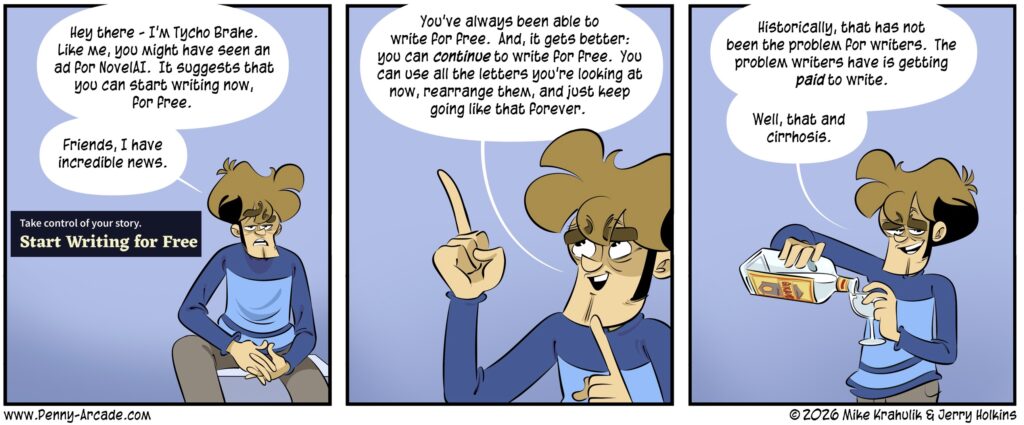
    My friend and fellow Resnick Award nominee Jason Boyd sent me this Penny Arcade comic from a few days ago:

    Screenshot

    That last panel… woof.

    (As a side note, I’ve actually met Jerry Holkins in person. I think that if you spend enough time in tabletop gaming stores in Seattle he will just make himself manifest. As I recall, he was buying Age of Sigmar figurines.)

    Aside from the perils posed by the other issue discussed in that last panel (I speak as someone who has, on occasion, consumed a wee bit too much of humanity’s favorite recreational hydrocarbon), there’s a lot to be said about the act of “creation” under AI that I still have a lot of thoughts about. As far as I can tell, the proponents of AI-based “writing” tools seem to have this belief that the reason writers write is to have a salable produce at the end of it – that the point of writing is to have written. In this worldview, books and stories are entirely fungible, and the act of creation is a burdensome chore. Think of how much time you’ll have, they imply, now that the boring writing part is out of the way!

    I think that, all things considered, if I had more time to write, I would probably spend that time writing.

    Perhaps I should view this narrow, ultracapitalist view of artists and creation as sad, or reprehensible. But I mostly find it confusing. For people who make tools that are ostensibly intended to help artists, I wonder if these tech bro AI proponents have actually ever interacted with an artist in any meaningful way. Or, perhaps, do they only socialize with other brogrammers in their spare time, and their worldview is so warped by that tiny echo chamber?

    This is largely the same reason why I don’t argue with fundamentalist Christians. Not because I think that they’re right, but because it would be impossible. The parameters by which our worldviews operate are so fundamentally different that communication couldn’t exist between us. In order for a discourse to occur, there has to be some kind of consensual reality that we can use as a basis. Otherwise, it would be like trying to discuss which pizza topping is best, only to learn halfway through an increasingly heated argument that when your interlocutor says pizza, they mean small cherrywood box filled with decorative painted thimbles from the Scandinavian region. There is an inherent incompatibility that becomes impossible to overcome.

    If you see nothing fundamentally different between a book written by a human and a hundred thousand words of Markov-chain generated text, maybe AI writing tools are a good idea to you. I suppose they both contain letters and words, and can be held in a .doc file. But if that’s the case, then you must genuinely believe that there is no difference between a human and a Markov-chain computer program, and when you’ve reached that point, our universal parameters are so contradictory that communication between us is impossible.

    ~ Ian (listening to Spine by Myrkur)

  • various thoughts and thinkings, february 2026

    I continue to not be writing very much, at least writing that’s intended to be published in any real form. I don’t know if I’m supposed to feel guilty or not because of that. I assume I shouldn’t, because I don’t feel guilty, but it still feels weird. When I’m in the swing of things, I usually write about a thousand words a day. This doesn’t feel that impressive to me. When I was a teacher in Madrid, I mentioned to one of my fellow auxiliares, a grad student from Swansea in Wales, that every day after school got out, I went to a cafe and wrote 2000 words. He was astonished. “How long does that take you?” he sputtered.

    I was confused. “Like, maybe an hour and a half?”

    “It would take me five hours to write that much! How are you so fast?”

    I shrugged. “Autism.”

    It sounds flippant, but it’s not. My brain’s ability to hyperfixate means that, when I get into the groove of something (especially something I’m interested in), I can block out the entire world and hone in on just that one thing for effectively indefinitely. There are drawbacks, but honestly, considering how they are in so many other ways, it’s surprising to me that neurotypicals can be productive writers. I mean, how can you be productive on a book if you’re spending all your time dating or having a family or a career or such other unnecessary fripperies?

    Still, aside from minor touch-ups on a few short fiction pieces, I haven’t written anything meant for publication in weeks. I was talking with a friend before our biweekly D&D session, however, and she said something that was more profound than I think she realized. “It’s okay to have a fallow period every once in a while,” she told me. I immediately thought, Fallow. What a great metaphor. As I’m sure all history nerds know, in a crop rotation system, a fallow field is hardly unproductive. Rather, it’s a critical part of replenishing the soil with nitrogen so that the field can be even more fertile the next season. Especially if you graze livestock in that fallow field so you can get still have some productivity out of that field that year. I just have to let the goats of daily experience poop in my brain so that my mind-field is re-nitrogenated, thus allowing much more fertile story-crops.

    Does this metaphor make sense? I think this metaphor makes sense.

    In any case, just because my story-field is currently fallow doesn’t mean that I haven’t been creative. Rather, I’ve rotated into writing lore and backstory for my D&D campaign. This is pleasant because there’s not much pressure to perform. My players are some of my best friends. I know that, no matter what, they will be a receptive audience, even if agents and short story markets might not be. Besides, writers love coming up with lore. I can think of several fantasy series that I’m sure primarily exist so the author can tell you all the neat lore they’ve come up with. It certainly can’t be because of the characters or the plots, because they’re not good or interesting. Ideally, I want the lore in my stories to be a side element. But that doesn’t mean that I don’t enjoy making it, and this gives me an excuse.

    Also! I had a conversation with an editor I met at DragonCon this last summer. He’d given me his business card, so I figured that it would be cool to reach out, and he was very kind in letting me ask him questions about the publishing industry and the way it be. Specifically, I wanted to know why, for the last few years, I’ve found it very difficult to get agents to request full manuscripts, when in the past I actually had agents reaching out for more writing rather frequently. He said that it’s not just me. Because of how everything generally is, sales are down across the publishing industry, and as such, agents are far less willing to take chances on unknown writers, especially if the writing defies easy categorization. The most important thing, he said, is to do the same thing that I’m already doing: keep writing, keep revising, keep querying. The number one thing that separates successful from unsuccessful writers is the same as it ever was: sheer, bloody-minded, pig-headed determination.

    At the very least, I can at least rest easy that, as always, there’s nothing wrong with me. It’s capitalism’s fault!

  • oft evil will doth evil mar

    I haven’t been updating this blog lately. There’s a very simple reason why: I haven’t been writing lately. I’ve been utterly overwhelmed with everything that’s been going on in the world lately, and especially here in the United States. I know that my country hasn’t always been the shining beacon of goodness and democracy that it has claimed to be, but I do think that overall, America has tried to do the right thing for the world, even when that has been misguided or just plain wrong. To see the events in Minneapolis recently, alongside the threat of a pointless war with Europe and the crumbling of eighty years of the post World War II world order, has been almost more than I can handle. Everything sucks these days, and for all the last month, I haven’t been able to work on anything except in the most desultory manner.

    But in times of trouble, like many people, I take comfort in my holy book. For me, that is probably Lord of the Rings.

    Yeah, it’s a cliche to say that I encountered Lord of the Rings and The Hobbit and had my entire personality and worldview changed. I’m not the only one. Be glad that it was Tolkien that triggered my writing obsession, not Robert Heinlein or Ayn Rand.

    If there are any lessons to be taken from Lord of the Rings, it’s that anyone, even the smallest among us, has the ability to change the world, and that no one, not even the most wretched among us, is beyond “pity”, as Tolkien put it, or empathy, as I would more likely phrase it. But that’s not what gives me comfort in this moment. No, it’s the chapter where the Isengard orcs kidnap Merry and Pippin in order to, as the meme says, “take the hobbits to Isengard”.

    The reason why Merry and Pippin are able to escape the orcs isn’t because they overpower them with strength of arms. It’s because the orcs kill each other. The orcs are composed of three different groups striving for dominance: the warrior Uruk-Hai, the orcs of Mordor, and the goblins of the Misty Mountains. The squabbling and posturing between them eventually leads to a massacre, because that’s what always happens among evil people. They will always destroy each other through the force of their own hatred and stupidity.

    The only way you can get evil people to work on a unified goal is when someone even stronger and more evil forces them to submit to their will. And, fortunately, the man who is the eye of the storm of darkness consuming my country is not strong. He is a fat, demented slug of a man, a lazy narcissistic coastal elite who, for some reason, has managed to grift millions into thinking he’s a working-class hero, with no interests or desires aside from satisfying his own vanity and enriching himself. And you just have to look at him – the softness in his body, the deadness in his eyes – to know that he’s not long for this world. Once he’s gone, who do you think can wield the kind of strength and cruelty that can keep his minions in line? J.D. Vance? Kristi Noem? Stephen Miller?

    For people who claim to be Christians, the current government clearly hasn’t learned the gospels’ warning re: houses built on foundations of sand. Only in this case, they’ve built their empire on a foundation of fat, saggy flesh, piloted by a brain that is just a couple Filet-O-Fishes away from a hemorrhage so powerful it could kill God. The greatest enemy of evil is evil.

    I’ll finish with the following quote by Tolkien himself, from “On Fairy Stories”:

    In what the misusers of Escape are fond of calling Real Life, escape is evidently as a rule practical, and may even be heroic. In real life it is difficult to blame it, unless it fails; in criticism it would seem to be the worse the better it succeeds […] Why should a man be scorned if, finding himself in prison, he tries to get out and go home? Or if, when he cannot do so, he thinks and talks about other topics than jailers and prison-walls? The world outside has not become less real because the prisoner cannot see it. In using Escape in this way the critics have chosen the wrong word, and what is more, they are confusing, not always by sincere error, the Escape of the Prisoner with the Flight of the Deserter. Just so a Party-spokesman might have labeled departure from the Führer’s and any other Reich and even criticism of it as treachery […] Not only do they confound the escape of the prisoner with the flight of the deserter, but they would seem to prefer the acquiescence of the ‘quisling’ to the resistance of the patriot. To such thinking you have only to say ‘the land you loved is doomed’ to excuse any treachery, indeed to glorify it.

    It is our duty to resist. It is our duty to love. It is our duty to dream of other, better worlds, no matter how many orcs or balrogs or Nazgûl stand against us.

    Besides, all things are temporary. This will end. We will remain.

    ~ Ian (listening to the soundtrack to O Brother, Where Art Thou?)

  • the act of creation under late stage capitalism

    My friend Tim makes beer. He’s actually really good at it. He has this beer that he brews with chamomile that, if I had it at a microbrewery or a good pub, I would consider to be one of my favorites of the year. The beers are 100% good enough that you could sell them.

    And yet, every time I hear someone tell Tim that he should sell his brews, my skin crawls a little bit. There are a few reasons for this. One is that the skillset required to make beer and the skillset for operating a microbrewery form a Venn diagram resembling Meszut Özil’s eyes. Making a business of brewing means producing beer at scale, leasing space to do it in, hiring employees, dealing with finances, arranging distribution and marketing… in short, all kinds of things that don’t involve beer and the making thereof. This is why so many microbrewers fail, even if their beer is excellent. Making stuff and selling it are vastly different endeavors.

    But most of the skin-crawly ick that these comments give me comes from something deeper. There’s a casual assumption in society that, if you’re good at something, it’s practically your obligation to monetize it, that creative work is only worth doing if it results in a salable product at the end. Under this paradigm, Tim is actively wasting his time with his homebrew hobby, no matter how much satisfaction the process of brewing gives him, or the joy that his family and friends receive from drinking his beer. Any moment of the day that is not devoted to maintaining basic bodily needs, according to society, is squandered by not squeezing every drop of revenue from it.

    It is a genuine tragedy of our culture that doing something for simple enjoyment is considered frivolous if it doesn’t result in a profit. And that’s what creative work is supposed to be: enjoyable. If you make beer, or knit, or paint, or create incredibly detailed tiny wooden sculptures of Bloom County characters, isn’t the pleasure you get from creation inherently worth it?

    Then I think about myself and my writing, and I get even more conflicted.

    I started writing for a lot of reasons. A lot of it was that I wanted to prove to others that I had value, the asshole students and bullying teachers that I dealt with every day. I thought that being the youngest ever published fantasy writer would win me friends and approval. But once I’d become better at writing, I discovered that I enjoyed it. Everything in my life seemed like work, from school to socializing to just being at home. Because writing didn’t feel like work, I thought that, if I were able to make money doing that, I wouldn’t have to deal with all the difficult life stuff that I hated.

    When I was a teenager, I wanted to write a genre-defining epic fantasy novel like Lord of the Rings. Now my goals are more modest. I just want to make a living as a writer so I don’t have to do that work stuff. I’m not there yet– the only money I’ve made is the $100 from the runner-up prize for the Resnick Award. Part of me, though, thinks that if I don’t end up making money as a writer, all of the work I’ve done, all the millions of words, the unpublished novels and short stories and games I’ve written, will have gone to waste.

    Is that an attitude that I have genuinely? Or have I somehow bought into the cultural delusion that creative work only has value if it’s profitable? I genuinely don’t know. Whatever the reason, that desire is tangled up with a lot of other things: my need for approval, my fear of failure, my wish to make a living without having to do “real work”. I don’t have any easy answers, and this post won’t provide any answers.

    At the very least, it’s hard submitting stories because the publishing industry, as much as it claims to be about literature, is an ultimately capitalist endeavor. The publishing houses, whether they’re Big Five or small press, are in the business of extracting as much money as they can from consumers for the least amount of overhead. This means that publishers and agents are very hesitant to take risks on any new writers or material. They would much rather have something by an established writer whose work is guaranteed to sell, or whatever trend is currently popular. That’s why you saw so many YA vampire romances twenty years ago and dystopian novels ten years ago. Now the trend is for smutty romantasies with titles like A Noun of Nouns and Nouns. It’s harder than ever for new writers to break through.

    Where does the line exist between selling out and selling, though? Do I have to change my work to fit in with current market trends? Ultimately that’s a self-defeating practice: it can take two years for a book to go from sale to publication date, so all those Sarah J. Maas and Rebecca Yarros ripoffs that just got six-figure deals will be hopelessly off-trend when they come out. Is my best bet to just write books I like, write works that I think are valuable, and keep submitting until I find an agent or editor who likes my writing for what it is?

    I don’t know. All I know is that this short-sighted trend chasing from the Big Five publishers contains the seeds of its own destruction. No one can predict what’s going to be a massive success in publishing (hell, just look at Fifty Shades of Grey), so playing it safe and just doing what sells is ultimately doomed. What sells now might not sell in the future. All those copies of Twilight and Fifty Shades are crowding the shelves at Goodwill. Maybe that doesn’t matter to their authors, who are massively wealthy, or the publishers who have already been paid for those copies. But doing what’s easy or safe, while tempting, is a losing strategy in the long run. The publishing industry, as well as society as a whole, has to learn that soon. Otherwise the future will crush it.

    ~ Ian (listening to Bexley by Bexley)

  • CHOO CHOO MOTHERLOVERS

    It was a huge day for transit nerds in Seattle this Saturday! Well, not in Seattle specifically, but the wild border country between the airport and Tacoma. Yes, as an early Christmas present, the Federal Way Link Light Rail extension opened, and since I had the day off, I spent the afternoon riding it!

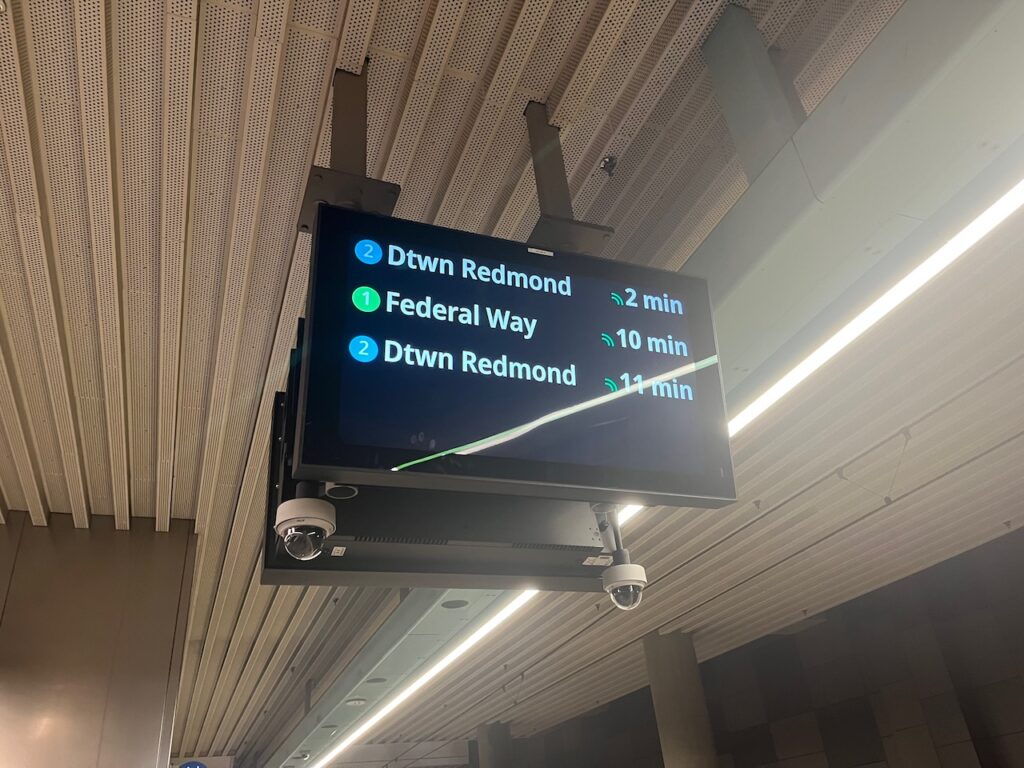
    I began at the light rail station near my home, U District Station. Immediately upon entering, something was different. Instead of saying “Angle Lake” as the terminus for the southbound line, the transit signage said “Federal Way”.

    Even knowing that the signs would change, it was kind of a shock to see. I’ve lived in Seattle for nearly a decade, and seeing anything other than “Angle Lake” was a little startling, in a pleasant way.

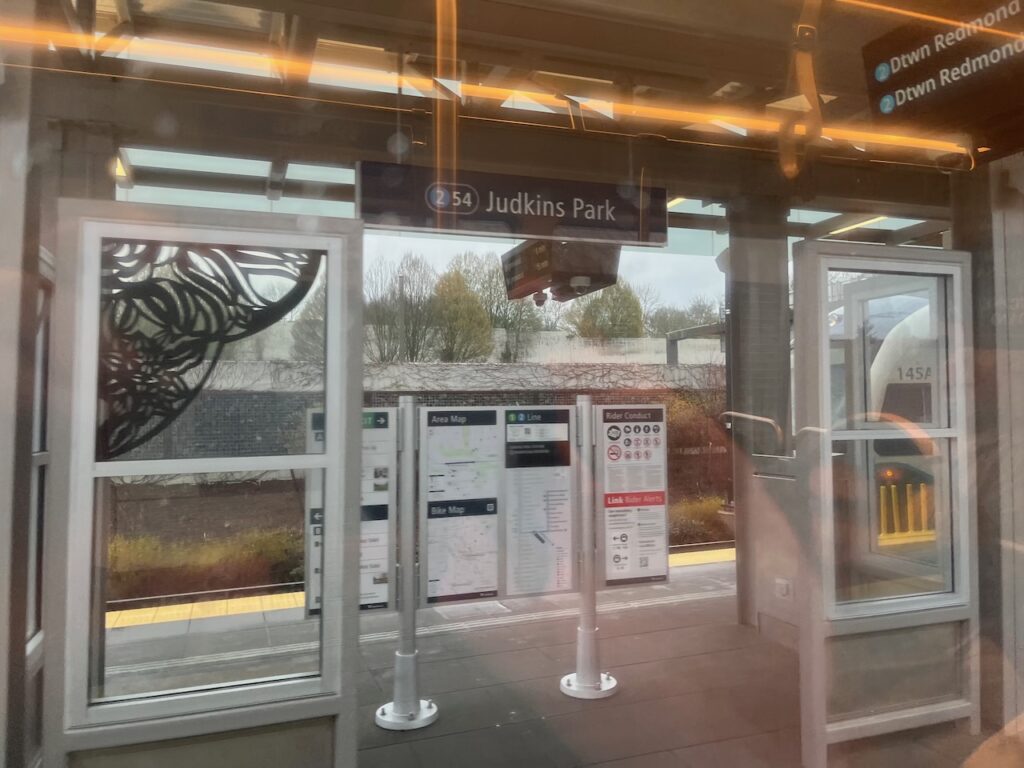
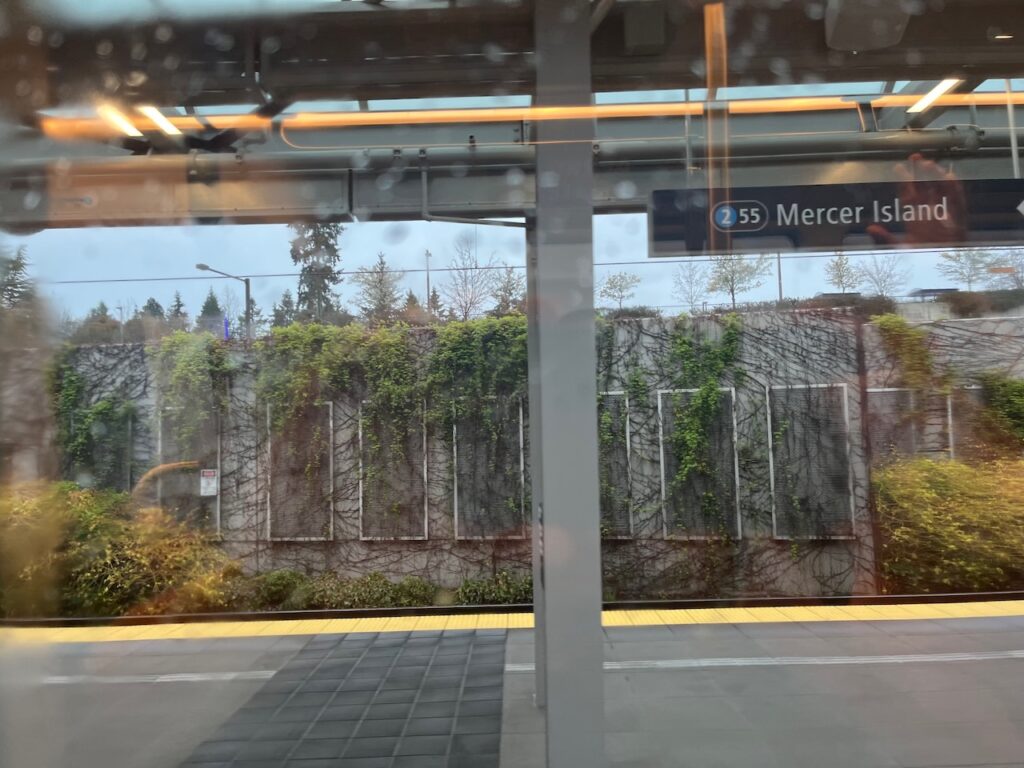
    After passing through downtown Seattle, Rainier Valley, and the airport, I got to see the new section of track and the new stations for the first time!

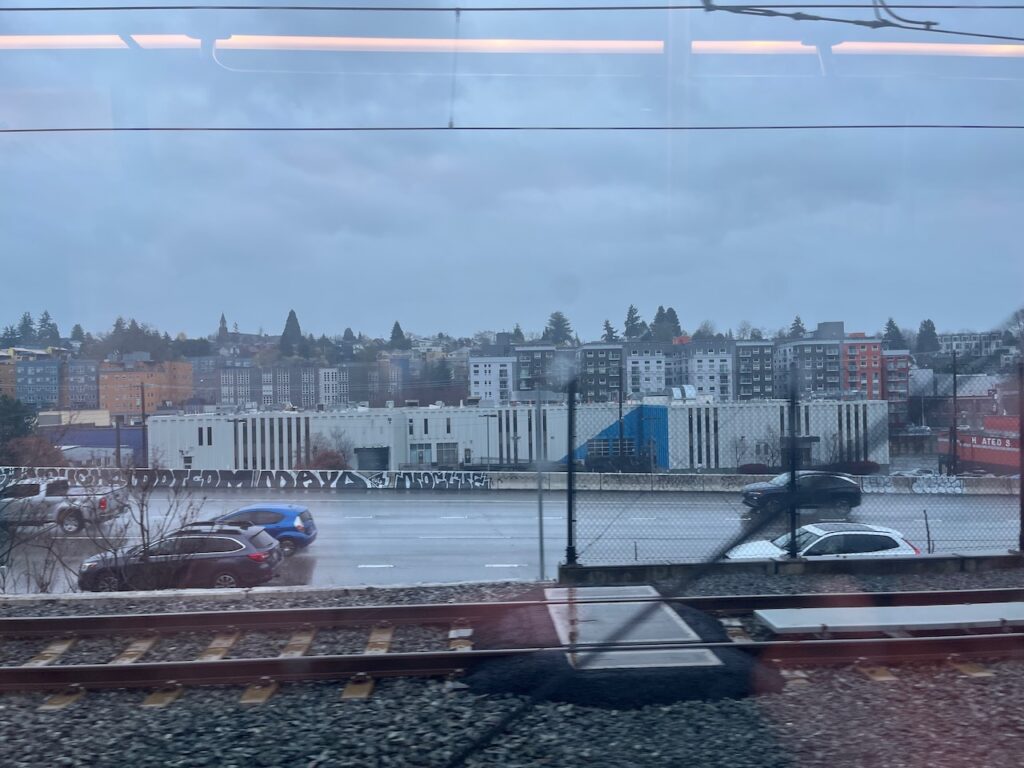
    Speeding past cars on I-5.
    Kent De Moines Station.
    Star Lake Station.

    Then, after a scenic trip past interstate highways, RV parks, and patches of bog surrounded by damp hemlock trees, I arrived at the terminus of my journey in the exotic southern climes of distant Federal Way!

    Since I had come all this way, I spent a pleasant time shopping at Federal Way’s premier bookstore, a combination bookstore/cafe called Barnes and… something? Barnes and Mobile? Not sure what mobile phones have to do with books, but it had a pretty good selection!

    After shopping and getting a li’l soupçon of writing done, it was 4:30, well past nightfall, and time to head home. Overall, an excellent excursion! If ever you are forced to be in Federal Way, the Link is an excellent way of getting there. And I’ll be able to take it all the way to Tacoma someday! Hopefully before I’m 50, but you never know in this town…

    Goodnight, Federal Way and all of South King County! I probably won’t ever visit you again for years, but it was nice while I did!

    ~ Ian (listening to Strega by SubRosa)

  • i like to be here when i can

    I was just down in California last week, visiting family and friends for the traditional autumnal bird consumption ritual festival. It’s always a little weird going to California for me. I spent years being miserable there, trying to get out. I’m surprised how much I enjoy it, although that’s probably just because that’s where my family lives, as well as most of my friends.

    The story of my moving to Seattle basically boils down to “I wanted to move here, so I did”. What I didn’t know is how quickly it would become my home. Seattle felt like home to me within six months, something that never entirely happened in my hometown. I feel a kinship with this place, despite its flaws, and whenever I return here, no matter how fun the trip was, I always feel a sense of unclenching, of being in a place where I belong.

    This begins as soon as I get off the plane for one reason: fonts.

    This was the view as I left my plane from San Jose at SeaTac Airport. The font on the sign up there is called Humnst 777. All the signage in the airport is in that font, which isn’t unusual, since all airports have some manner of unified typography. But the use of this font continues once you leave the airport and get onto the Link light rail. All the station signage is in this same font. So are the signs in bus stations across King County. In fact, I’d argue that this font is as much a symbol of Seattle and the larger Puget Sound as the Space Needle, Starbucks, and annoying tourists who refuse to drink any beer that doesn’t have enough hops in it to turn it green.

    It’s funny how we create these signifiers of home within our minds. Maybe someone who doesn’t ride the Link every day like I do wouldn’t have such associations with this font. But for me, it’s just a reminder of the human element of good design.

    ~ Ian (listening to I Heard It’s A Mess There Too by Aesop Rock)