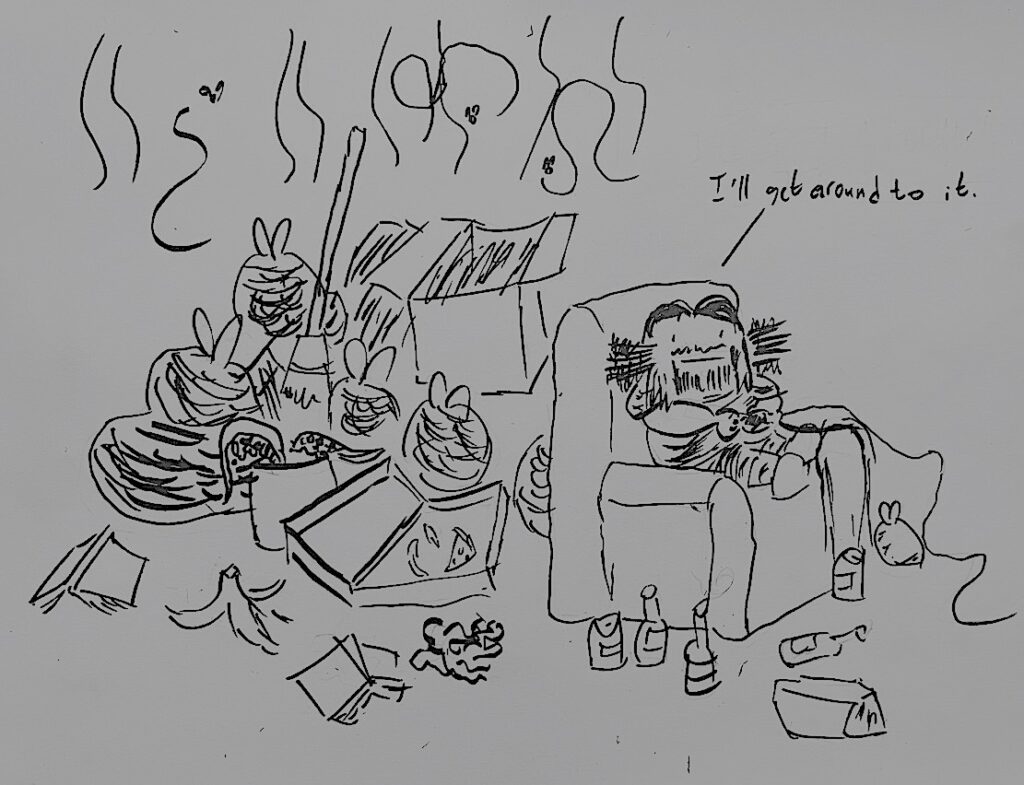
I’ve been down in the editing mines recently, revising a fairly large portion of an unfinished novel before I resume drafting. I would say that editing is one of my favorite parts of the writing process, but since I enjoy every part of the writing process (it’s the publishing that I hate), I would say it’s about equal with all the others. I get the same enjoyment from editing that a lot of Type A people get from tidying up, which is ironic, because I am absolutely terrible at keeping my apartment clean.
When I’m editing, my goal is generally to cut about 5-10% of the words in the total project, usually averaging to around 7.5%. Interestingly, I almost never have to cut actual story content. Most of the revisions are finding more concise ways of writing sentences and paragraphs: if I have a ten-word sentence, finding ways to say it in eight, and so on. This ends up making the story more effective, as I’m able to get rid of extraneous fluff while keeping the good stuff.
It’s sort of like pasta sauce. You can make a really good pasta sauce out of a can of tomatoes, garlic, oil, and some spices that tastes better and is cheaper than the jar pasta. But just pouring a tomato can and the rest of the ingredients over cooked pasta doth not a sauce make. You have to simmer it, steaming off the water and condensing the liquid until it is thick and saucy and delicious.
Revising is just as important as writing. Or rather, it is writing, because coming up with a first draft is only the start of the process. The first draft is the raw material. It’s your job as the writert to sculpt it.
These are a lot of mixed metaphors, I guess? Whatever. In any case, getting good at editing and revising is one of the most critical skills I can give to a young writer. And don’t give me that “spellcheck is really advanced these days”. If you don’t know how to spell words, revising is the least of your problems.